Parkinson's Disease and LSVT BIG
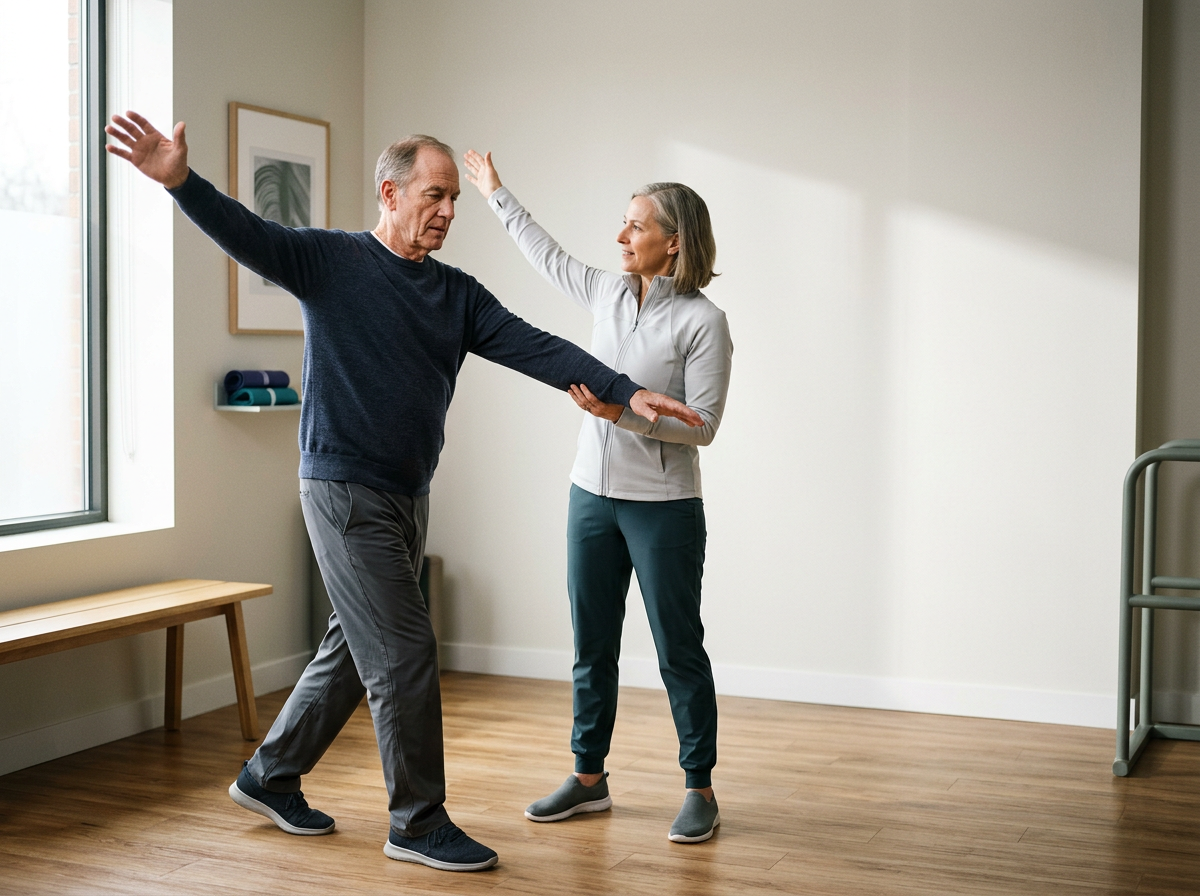
If you or someone you love is living with Parkinson's disease, you may have noticed movement slowly getting smaller. Steps shorten. Handwriting shrinks. Getting up from a chair or turning over in bed takes more effort than it used to.
The encouraging news: these changes are not something you simply have to accept. A research-based physical therapy program called LSVT BIG was designed specifically to target them, by retraining the body and brain to move bigger, faster and with more confidence.
In this post, our team at Impact Physical Therapy & Sports Performance explains how Parkinson's affects movement, what LSVT BIG involves, what the research shows and how to know if it's right for you.
How Parkinson's Disease Affects Movement
Parkinson's is a progressive neurological condition caused by the loss of dopamine-producing cells in the brain. Dopamine helps regulate smooth, automatic movement, so as levels fall, movement changes in predictable ways:
Bradykinesia: movements become slower and harder to start.
Hypokinesia: movements become smaller, such as shorter steps, reduced arm swing and smaller handwriting.
Gait changes: shuffling, a stooped posture, difficulty turning and sometimes freezing in doorways or tight spaces.
Balance problems: reduced postural reactions that increase the risk of falls.
Rigidity: stiffness in the trunk and limbs that limits rotation and reach.
One of the most important and least understood pieces is sensory recalibration. People with Parkinson's often don't perceive that their movements have become smaller. A step that is noticeably short to an observer can feel completely normal to the person taking it. That mismatch is exactly what LSVT BIG is built to address.
What Is LSVT BIG?
LSVT BIG is a standardized, intensive exercise program for people with Parkinson's, delivered by physical and occupational therapists who have completed LSVT BIG certification. It grew out of LSVT LOUD, a speech therapy program developed in the late 1980s that taught people with Parkinson's to speak louder. Researchers later applied the same principles to the rest of the body.
The program rests on one simple, powerful idea: amplitude. Every exercise is performed with big, exaggerated, full-effort movements. Over time, this practice helps the brain recalibrate what "normal" movement feels like, so bigger movement becomes automatic in daily life instead of something you have to think about.
LSVT BIG draws on principles of neuroplasticity, the brain's ability to adapt and form new connections. That means high intensity, many repetitions, tasks that matter to the patient and consistent daily practice.
What an LSVT BIG Program Looks Like
Because LSVT BIG is a standardized program, you can expect the same proven structure wherever it's delivered. Treatment includes 16 one-on-one sessions, scheduled 4 days a week for 4 consecutive weeks, with each session lasting about an hour.
Practice doesn't stop when you leave the clinic. You'll complete daily home exercises on both treatment and non-treatment days, which helps the new movement patterns stick. After the 4 weeks, your therapist will set you up with an ongoing "BIG for life" home program so your progress carries forward.
Each session typically includes:
Maximal daily exercises: whole-body, large-amplitude movements in sitting and standing, such as big reaches, big steps and big trunk rotations.
Functional component tasks: movements taken from everyday life, like standing up from a chair, rolling in bed or reaching overhead, practiced "big."
Personalized hierarchy tasks: goals chosen by you, such as getting in and out of a car, walking through a grocery store or returning to golf, padel or gardening.
Big walking: practicing longer steps and stronger arm swing, then carrying that into real-world settings.
The intensity is intentional. The 4-week commitment is demanding, but it's what drives the lasting changes the research has documented.
What the Research Shows
LSVT BIG has been studied in clinics and universities around the world. The best-known trial is the Berlin BIG Study (Ebersbach et al., Movement Disorders, 2010). Sixty people with mild to moderate Parkinson's were randomly assigned to LSVT BIG, supervised Nordic walking or unsupervised home exercise.
At the 16-week follow-up, the LSVT BIG group improved their motor score (UPDRS-III) by about 5 points, while the Nordic walking and home exercise groups slightly worsened.
LSVT BIG also outperformed both groups on the Timed Up and Go test and timed 10-meter walking.
Other studies and case series have reported improvements in:
Walking speed and step length
Balance and functional reach
Bed mobility and getting up from a chair
Freezing of gait
Quality of life
It's worth being honest about the evidence, too. A systematic review noted that the number of high-quality studies is still relatively small, and more research is needed. Still, LSVT BIG remains one of the most structured, consistently delivered and studied exercise programs specific to Parkinson's.
Research also shows that gains fade without continued practice. That's why ongoing home exercise after the 4-week program is so important.
Who Is a Good Candidate for LSVT BIG?
LSVT BIG can help people at many stages of Parkinson's, but it's often most effective when started early, sometimes even right after diagnosis, before significant mobility problems develop. It may be a good fit if you:
Have been diagnosed with Parkinson's disease, at any stage where you can participate in exercise
Notice shorter steps, shuffling, a softer arm swing or slower movement
Feel unsteady, have had a near-fall or worry about falling
Have trouble with everyday tasks like getting out of a chair, car or bed
Want to stay active in sports, hobbies, work or family life
LSVT BIG has also been explored for other neurological conditions, though Parkinson's remains its primary focus. Your physician and physical therapist can help you decide on timing.
What about LSVT LOUD? LSVT BIG's sister program, LSVT LOUD, is delivered by speech-language pathologists and targets the soft voice and reduced speech clarity that often come with Parkinson's. Many people benefit from both. Ask your physician about a referral to a certified speech therapist if voice changes are a concern.
LSVT BIG at Impact Physical Therapy in Miami
At Impact, we believe people with Parkinson's deserve the same focused, high-quality care as any athlete coming back from injury. LSVT BIG fits naturally with how we already practice:
One-on-one sessions. LSVT BIG requires your therapist's full attention, coaching every repetition and pushing effort safely. That's how we treat every patient. We are not a high-volume clinic.
Certified therapists. Our LSVT BIG program is delivered by therapists who have completed official LSVT BIG certification.
A movement-focused team. Our orthopedic and sports performance background means we look closely at biomechanics, strength and balance, not just the exercises on a sheet.
Insurance-friendly care. LSVT BIG is delivered as physical therapy and is often covered by Medicare and many commercial plans. Our front desk team will verify your benefits and walk you through any authorization before you start.
Real-life goals. Whether your goal is walking your dog, getting back on the padel court or traveling with confidence, we build your program around what matters to you.
A plan for after. We'll send you home with a clear, sustainable exercise routine so your progress lasts.
Ready to Move Bigger?
If you or a loved one is living with Parkinson's, you don't have to wait until movement becomes a problem. Call Impact Physical Therapy & Sports Performance to schedule an evaluation or ask whether LSVT BIG is right for you.
Impact Strength · 8200 SW 117 Ave, Suite 202, Miami, FL 33183 · Follow us on Instagram at @Impact.Strength
Empowering Movement, Elevating Strength.
Frequently Asked Questions
Do I need a referral for LSVT BIG? Florida allows limited direct access to physical therapy, but many insurance plans, including Medicare, require a physician's prescription. A script from your neurologist or primary care physician is the simplest way to start.
Is LSVT BIG covered by insurance? LSVT BIG is billed as physical therapy, so it's often covered by Medicare and many commercial plans. Coverage, visit limits and authorization rules vary, so we verify your benefits before your first session.
Is LSVT BIG too intense for me? The program is challenging by design, but every exercise is scaled to your ability and safety. Your therapist adjusts effort, support and progression throughout the 4 weeks.
What if I've had Parkinson's for many years? LSVT BIG is often started early, but people at later stages have also shown improvements. Your evaluation will determine whether it's the right approach for you.
What happens after the 4 weeks? You'll continue a daily home program to maintain your gains. Some patients return for periodic "tune-up" sessions to refresh their exercises and recheck progress.
Does LSVT BIG replace my medication? No. LSVT BIG works alongside your medical treatment. Keep taking medications as prescribed and keep your neurologist informed about your therapy.
Disclaimer and References
This article is for educational purposes only and isn't a substitute for medical advice. Talk with your physician before starting a new exercise program.
References:
Ebersbach G, et al. Comparing exercise in Parkinson's disease: the Berlin LSVT BIG study. Movement Disorders. 2010;25(12):1902–1908. Study abstract
Janssens J, et al. Application of LSVT BIG intervention to address gait, balance, bed mobility, and dexterity in people with Parkinson disease: a case series. Physical Therapy. 2014. Record
Effects of LSVT-BIG training on motor functioning of people with Parkinson's disease: a systematic review. Thieme Connect
LSVT Global. LSVT BIG research references. blog.lsvtglobal.com